Wednesday, December 12, 2012

Tao cannot be mocked - III

Francois Xavier Fabre, Oedipus and the Sphinx, c. 1806-08, Dahesh Museum of Art, NYX
II Contradictory and Conflicting Themes
Another mental characteristic of larger systems can be exemplified from themes of Greek drama. In that complex corpus of shared ideas, there existed side by side with the Oresteia a second cross-generational sequence of myths bound together by the concept of anangke and starting from a specific act. Cadmus incurred the wrath of Ares by killing a sacred serpent, and this set the stage for repeated episodes of trouble in the royal house of Thebes. Eventually, the oracle at Delphi predicted that Laius, king of Thebes, would have a son who would kill him and marry his own mother, Jocasta, the wife of Laius.
Laius the tried to thwart the oracle and thus, in spite of himself, precisely brought on himself the working out of the tragic necessity. First he refused sexual contact with Jocasta to avoid the begetting of the son who would kill him. But she made him drunk and the child was begotten. When the baby was born, Laius commanded that he be bound and abandoned on the mountainside. But again Laius‘ plan failed. The baby was found by a shepherd and adopted by Polybus, king of Corinth. The boy was named Oedipus, or Swollen Footed, because the baby‘s feet were swollen from being tied together when he was exposed on the mountain.
As Oedipus grew up, he was taunted by the other boys, who said he did not resemble his father He therefore went to Delphi for an explanation and was condemned by the oracle as the boy fated to kill his father and marry his mother. Oedipus, not knowing that he was an adopted child and believing that Polybus was his true father, then fled. He would not return to Corinth lest he should kill.
Fleeing thus, he met with an unknown man in a chariot who rudely refused him right of way. He killed that unknown man, who was in fact Laius, his true father. Proceeding on his way, he encountered a Sphinx outside Thebes and answered her riddle: “What is it that walks first on four legs, then on two, and finally on three?” The Sphinx then destroyed herself, and Oedipus found himself suddenly a hero who had conferred a great benefit upon the city of Thebes. He became king of that city by marrying Jocasta. By her he had four children. Finally, plague struck the city and the oracle attributed the cause of the plague to one man‘s horrible action. Oedipus insisted on investigating this matter, although the blind sage Tiresias had advised him to let sleeping dogs lie. The truth was finally exposed. Oedipus, the king of Thebes, was himself the man who had killed his father and married his mother. Jocasta then hanged herself in horror and Oedipus blinded himself with a pin from her scarf.
Oedipus was exiled from Thebes and wandered the world, accompanied by his daughter Antigone. Finally, old and blind, he arrived at Colonos, outside Athens. There he mysteriously vanished in the groves sacred to the Furies, presumably accepted by them into their afterlife.
It is immediately interesting to note a formal contrast between this tale and the Orestes sequence, for Oedipus went spontaneously to the grove of the Furies, whereas Orestes was chased by them. This contrast is explained in the finale of Aeschylus‘ Orestes trilogy, where Athena lays down the law that Athens is a patriarchal society in which wives are not fully kin to their offspring, who remain in the gens, or clan, of the father. The mother is a “stranger” and matricide is therefore no crime. (After all, Athena never had a mother; she sprang fully armed from the head of her father, Zeus.) The Furies, on the other hand, matriarchal goddesses, will forgive Oedipus, the boy who kills his father and has four children by his mother, but will not pardon Orestes the matricide.
In fact, the culture of classical Athens carried two utterly contrasting mythological sequences, The Oedipus sequence, which is the nightmare of crime against the father, and the Orestes nightmare of crime against the mother.
I personally am dissatisfied with Athena‘s explanation, in which she dismisses the Furies as a bunch of old hags, obsolete survivors of a more primitive matriarchy. As an anthropologist, I do not believe that there ever existed any society that was one hundred percent matriarchal not any that was one hundred percent patriarchal. In many societies, kinship is asymmetrical, so that a different kind of relationship is developed on each side of the genealogy. The child has different obligations and privileges vis-à-vis his maternal uncles from those implicit in his relationship with paternal uncles. But always there are benefits and duties on both sides. The whole play, Aeschylus‘ Eumenides, is very strange, and also is the Oedipus at Colonos of Sophocles. I can only read the Eumenides as either extremely jingoistic Athenian patriotism, or, more probably, a caricature of that patriotism. The Colonos, on the other hand, is surely a very serious piece, no less patriotic than the Eumenides, since it, too, deals with the ancient history of the city of Athens. Strangely, the members of the audience are expected to understand the old, blind Oedipus is now a sacred figure and there is almost a war brewing between Oedipus‘ descendants in Thebes and Theseus, the founder of the new city of Athens. Both parties want Oedipus to die on their national territory and to become somehow a guardian spirit for that land.
My suspicion – and it is to illustrate this that I have introduced the tales – is that each myth owes something to the other, and they are a balancing pair that is a product jointly of a culture divided in its emphasis on matriarchy or patriarchy. I would ask whether this double expression of the conflicting views is not somehow typical of the divided larger mind.
The syncretic dualism of Christian mythology provides a similar but more astonishing example. Jehovah is clearly a transcendent god of Babylonian times whose location is on top of an artificial mountain, or ziggurat. Jesus, in clear contrast, is a deity whose location is in the human breast. He is an incarnate deity, like Pharoah and like every ancient Egyptian who was addressed in mortuary ceremonies as Osiris.
It is not that one or the other of these double phrasings is right, or that it is wrong to have such double myths. What seems to be true is that it is characteristic of large cultural systems that they carry such double myths and opinions, not only with no serious trouble, but perhaps even reflecting in the latent contradictions some fundamental characteristic of the larger mentality.
In this connection, Greek mythology is especially interesting because its stories did not draw the line between the more secular and human gestalten and the larger themes of fate and destiny the same way as these lines are drawn among us today. The Greek classification was different from ours. Greek gods are like humans, they are puppets of fate just like people, and the interaction between the forces of what seems a larger mind and mere gods and humans is continually being pointed out by the chorus. They see that the gods and heroes and themselves are alike puppets of fate. The gods and heroes in themselves are as secular as our superman, whom indeed they somewhat resemble.
In mythology and especially drama, the eerie and the mysterious – the truly religious overtones – are contained in such abstractions as anangke or nemesis. We are told rather unconvincingly that Nemesis is a goddess and that the gods will punish the arrogance of power which is called hubris. But in truth these are the names of themes or principles, which give an underlying religious flavour to life an drama; the gods are at most the outward, though not visible, symbols of these more mysterious principles. A similar state of affairs exists in Balinese religion, where, however, the gods are almost totally drained of all personal characteristics. They (except for Rangda, the Witch, and Barong, or dragon) have only names, directions, colors, calendric days, and so on. In dealing with each of them it is the appropriate etiquette that is important.

Tuesday, December 11, 2012

Tao and the selfish


The Sufi teaching story, "Bayazid and the Selfish Man", shows how difficult it is for an adult to free himself from the power of ordinary consciousness and consensus reality, even when he believes he wants to:
One day a man reproached Bayazid, the great mystic of the ninth century, saying that he had fasted and prayed and so on for thirty years and not found the joy which Bayazid described.

Bayazid told him that he might continue for three hundred years and still not find it.

"How is that?" asked the would-be illuminate.

"Because your vanity is a barrier to you."

"Tell me the remedy."

"The remedy is one which you cannot take."

"Tell me, nevertheless."

Bayazid said: "You must go to the barber and have your (respectable) beard shaved. Remove all your clothes and put a girdle around yourself. Fill a nosebag with walnuts and suspend it from your neck. Go to the marketplace and call out: 'A walnut will I give to any boy who will strike me on the back of neck.' Then continue to the justices'session so that they may see you."

"But I cannot do that; please tell me something else that would do as well."

"This is the first move, and the only one", said Bayazid, "but I had already told you that you would not do it; so you cannot be cured."
Shrine of Bayazid Bastami in Bastam near Shahroud.

Friday, December 7, 2012

Tao en-culturation

Kurt Wenner.com, Waterloo Station
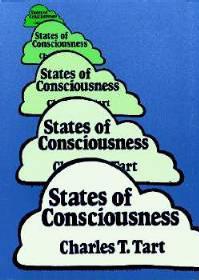
Describing the ordinary state of consciousness Tart indicates the basic factors which bring to its individual training into a specific socio-cultural group, such the enculturation process - the training of the specific personal culture within a wider shared social culture - :

I have now mentioned several times that we believe certain things imply because we were trained to believe them. Let us now look at the training process by which our current "normal" or ordinary state of consciousness came about.

Enculturation
Figure 4-4 illustrates the concept of the spectrum of human potential. By the simple fact of being born human, having a certain type of body and nervous system, existing in the environmental conditions of the planet earth, a large (but certainly not infinite) number of potentials are possible for you. Because you are born into a particular culture, existing at a particular time and place on the surface of the planet, however, only a small (perhaps a very small) number of these potentials will ever be realized and become actualities. We can think of a culture as a group of people who, through various historical processes, have come to an agreement that certain human potentials they know of are "good," "holy," "natural," or whatever local word is used for positively valuing them, and should be developed. They are defined as the essence of being human. Other potentials, also known to the culture, are considered "bad," "evil," "unnatural." The culture actively inhibits the development of these potentials in its children, not always successfully. A large number of other human potentials are simply not known to that particular culture, and while some of them develop owing to accidental circumstances in a particular person's life, most do not develop for lack of stimulation. Some of these potentials remain latent, capable of being developed if circumstances are right in later life; others disappear completely through not being developed at an early, critical stage. Most of us know how to do arithmetic, speak English, write a check, drive an automobile, and most of us know about things, like eating with our hands, which are repellent to us (naturally or through training?). Not many of us, though, were trained early in childhood to enter a d-ASC where we can be, for example, possessed by a friendly spirit that will teach us songs and dances as is done by some cultures. Nor were most of us trained to gain control over our dreams and acquire spirit guides in those dreams who will teach us useful things, as the Senoi of Malaysia are. Each of us is simultaneously the beneficiary of his cultural heritage and the victim and slave of his culture's narrowness. What I believe is worse is that few of us have any realization of this situation. Like almost all people in all cultures at all times, we think our local culture is the best and other peoples are uncivilized or savages. Figure 4-4 shows two different cultures making different selections from and inhibitions of the spectrum of human potential. There is some overlap: all cultures, for example, develop a language of some sort and so use those particular human potentials. Many potentials are not selected by any culture. We can change the labels in Figure 4-4 slightly and depict various possible experiences selected in either of two states of consciousness. Then we have the spectrum of experiential potentials, the possible kinds of experiences or modes of functioning of human consciousness. The two foci of selection are two states of consciousness. These may be two "normal" states of consciousness in two different cultures or, as discussed later, two states of consciousness that exist within a single individual. The fact that certain human potentials can be tapped in state of consciousness A that cannot be tapped in state of consciousness B is a major factor behind the current interest in altered states of consciousness. Figure 4-4, then, indicates that in developing a "normal" state of consciousness, a particular culture selects certain human potentials and structures them into a functioning system. This is the process of enculturation. It begins in infancy, possibly even before birth: there has been speculation, for example, that the particular language sounds that penetrate the walls of the womb from outside before birth may begin shaping the potentials for sound production in the unborn baby.
Figure 4-5 summarizes the main stages of the enculturation process. The left-hand column represents the degree to which physical reality shapes the person and the degree to which the person can affect (via ordinary muscular means) physical reality. The right-hand column indicates the main sources of programming, the psychological influences on the person. The main stages are infancy, childhood, adolescence, adulthood, and senescence.

Wednesday, December 5, 2012

Tao metapatterns

Kybernetes, Vol. 36 No. 7/8, 2007
The concepts and metaconcepts of pattern, pattern which connects and metapattern - pattern of patterns - developed by Bateson in the context of the epistemology metascience, in his words outlined as:
It is the Platonic thesis of [this] book that epistemology is an indivisible, integrated meta-science whose subject matter is the world of evolution, thought, adaptation, embryology, and genetics – the science of mind in the widest sense of the word.
The comparing of these phenomena (comparing thought with evolution and epigenesis with both) is the manner of search of the science called "epistemology."

In my life, I have put the descriptions of sticks and stones and  billiard balls and galaxies in one box , the pleroma, and have left them alone. In the other box, I put living things: crabs, people, problems of beauty, and problems of difference. The contents of the second box are the subject of this book.
I was griping recently about the shortcomings of occidental education. It was in a letter to my fellow regents of the University of California
, and the following phrase crept into my letter:
"Break the pattern which connects the items of learning and you necessarily destroy all quality."
I offer you the phrase the pattern which connects as a synonym, another possible title for this book.
The pattern which connects. Why do schools teach almost nothing of the pattern which connects? Is it that teachers know that they carry the kiss of death which will turn to tastelessness whatever they touch and therefore they are wisely unwilling to touch or teach anything of real-life importance? Or is it that they carry the kiss of death because they dare not teach anything of real-life importance? What's wrong with them?
What pattern connects the crab to the lobster and the orchid to the primrose and all the four of them to me? And me to you? And all the six of us to the amoeba in one direction and to the back-ward schizophrenic in another?

Let me start again. The parts of a crab are connected by various patterns of bilateral symmetry, of serial homology, and so on. Let us call these patterns within the individual growing crab first-order connections. But now we look at crab and lobster and we again find connection by pattern. Call it second-order connection, or phylogenetic homology.
Now we look at man or horse and find that, here again, we can see symmetries and serial homologies. When we look at the tow together, we find the same cross-species sharing of pattern with a difference (phylogenetic homology). And, of course, we also find the same discarding of magnitudes in favor of shapes, patterns, and relations. In other words, as this distribution of formal resemblances is spelled out, it turns out that gross anatomy exhibits three levels or logical types of descriptive propositions:

1. The parts of any member of Creatura are to be compared with other parts of the same individual to give first-order connections.
2. Crabs are to be compared with lobsters or men with horses to find similar relations between parts (i.e., to give second-order connections).
3. The comparison between crabs and lobsters is to be compared with the comparison between man and horse to provide third-order connections.

We have constructed a ladder of how to think about – about what? Oh, yes, the pattern which connects.

My central thesis can now be approached in words: The pattern which connects is a metapattern. It is a pattern of patterns. It is that metapattern which defines the vast generalization that, indeed, it is patterns which connect.


have been further developed mainly by Tyler Volk and Jeffrey Bloom, specifying a number of metapatterns applied in several fields:
Complicity, An International Journal of Complexity and Education
1 Spheres: maximum volume, minimum surface, containment; grapes, domes.
2 Sheets: transfer surface for matter, energy, or information; fish gills, solar collectors.
3 Tubes: surface transfer, connection, support; leaf veins, highways, chains of command.
4 Webs or Networks: parts in relationships within systems (can be centered or clustered, using clonons or holons, see 8, 11, and 12); subsystems of cells, organisms, ecosystems, machines, society.
5 Borders: protection, openings for controlled exchange; cell membranes, national borders.
6 Binaries: minimal and thus efficient system; two sexes, two-party politics, bifurcating decision process.
7 Gradients: continuum of variation between binary poles; chemical waves in cell development, human quantitative and qualitative values.
8 Centers: key components of system stability; DNA, social insect centers, political constitutions and government.
9 Layers or Holarchy: levels of webs, in which successive systems are parts of larger systems; biological nesting from biomolecules to ecosystems, human social nesting, engineering designs, computer software.
10 Emergence: general phenomenon when a new type of functionality derives from binaries or webs; life from molecules, cognition from neurons.
11 Holons versus clonons: parts of systems as functionally unique versus interchangeable; heart-lungs-liver (holons) of body versus skin cells (clonons) of the skin.
12 Clusters: subset of webs, distributed systems of parts with mutual attractions; bird flocks, ungulate herds, children playing, egalitarian social groups.
13 Arrows: stability or gradient-like change over time; biological homeostasis, growth, self-maintaining social structures.
14 Breaks: relatively sudden changes in system behavior; cell division, insect metamorphosis, coming-of-age ceremonies, political elections.
15 Triggers: initiating agents of breaks, both internal and external; sperm entering egg, precipitating events of war.
16 Cycles: recurrent patterns in systems over time; protein degradation and synthesis, life cycles, power cycles of electricity generating plants, feedback cycles, educational grade levels (cyclic design within an arrow of overall educational progress.

The metapatterns outlined by Volk and Bloom have been correlated to several characteristics of chaos and complexity:
by Anukriti Verma, M.Des student at Industrial Design Centre (IDC), IIT Bombay; site: Ravi Poovaiah

Metapatterns

The Pattern Underground

in a glass Tao


Looking through the window can you tell me what you see
You're sure you're really seeing what is meant to be a glass
A mirror to reflect what I conspire a vision, image I desire

Standing on the ice believing all I'm searching for
Close your cloudy eyes and chase all that you did before
Standing on the ice believing all I'm searching for
Close your cloudy eyes and chase all that you did before

Living in a glass house shielding all that's meant for me
Can you clear the shade and can you tell me what you see?

Shadow fills the light until the glass house becomes the night
Dark is gleaming or am I dreaming? Running everywhere, seeing clearly when I dare
Is it today or is it your way and the moon must fall
Inspiration waits for your call for you to get a silhouette

Narrow the field aim in any direction
Do what I feel just to see my reflection

Any turn I know disappearing everywhere I go I look to you for what I do
And only then I see that the glass house is just for me
And any time is never mine

Narrow the field aim in any direction
Do what I feel just to see my reflection

Shadow fills the light, until the glass house becomes night
Dark is gleaming or am I dreaming?
Running everywhere, seeing clearly when I dare
Is it today or is it your way and the moon must fall
Inspiration waits for your call for you to get a silhouette.

Tuesday, December 4, 2012

Tao aggregates of the Self

© Igor Morski
After the cognitivist description of the Self and the mind and its crititical discussion from a phenomenological-experiental point of view, Varela, Rosch and Thompson integrates for the first time in the cognitive sciences terms and concepts taken from the eastern traditions which - for millennia - have studied and described in a experiential way the entities of Mind, Consciousness and Self; particularly the authors introduce for the description the five aggregates of the Abhidharma canons of the Buddhist tradition:

Looking for a Self in the Aggregates
We now tum to some of the categories in the Buddhist teachings called the Abhidharma. This term refers to a collection of texts that forms one of the three divisions of the Buddhist canon (the other two are the Vinaya, which contains ethical precepts, and the Sutras, which contain the speeches of the Buddha). Based on the Abhidharma texts and their later commentaries, there emerged a tradition of analytic investigation of the nature of experience, which is still taught and used in contemplation by most Buddhist schools. The Abhidharma contains various sets of categories for examining the arising of the sense of self. These are not intended as ontological categories, such as one finds, for example, in Aristotle's Metaphysics. Rather, these categories serve on the one hand as simple descriptions of experience and on the other hand as pointers toward investigation.
The most popular set of these categories, one that is common to all Buddhist schools, is known as the five aggregates. (The Sanscrit term translated as "aggregate" is skandha, which literally means "heap." The story goes that when the Buddha first taught this framework for examining experience, he used piles of grain to stand for each aggregate.)
The five aggregates are

1. Forms


3. Perceptions (discernments )/impulses


The first of the five aggregates is considered to be based on the physical or material; the remaining four are mental. All five together constitute the psychophysical complex that makes up a person and that makes up each moment of experience. We will examine the way in which we take each of these to be ourselves and will query whether we can find something in the aggregates that will answer to our basic, emotional, reactional conviction in the reality of self. In other words, we will be looking for a full-blown, really existing ego-self-some lasting self that would serve as the object of our emotional conviction that there really is a ground underneath the dependent, impermanent, everyday personality.

Forms
This category refers to the body and the physical environment. It does so, however, strictly in terms of the senses-the six sense organs and the corresponding objects of those organs. They are the eye and visible objects, the ear and sounds, the nose and smells, the tongue and tastes, the body and touchables, and the mind and thoughts. The sense organs do not refer to the gross external organ but to the actual physical mechanism of perception. The mind organ (there is debate in the tradition as to just what physical structure that is) and thoughts are treated as a sense and its object because that is how they appear in experience: we feel that we perceive our thoughts with our mind just as we perceive a visible object with our eye.
We might point out that even at this level of analysis we have already departed from the usual idea of an abstract, disembodied observer who, like a cognitive entity parachuted into a ready-made world, encounters matter as a separate and independent category.
Here, as in Merleau-Ponty's phenomenology, our encounter with the physical is already situated and embodied. Matter is described experientially.
Is our body our self? Think how important our body and possessions are to us, how terrified we become if the body or important possessions are threatened, how angry or depressed we become if they are damaged. Think of how much effort, money, and emotion we spend on feeding, grooming, and caring for the body. Emotionally we treat the body as though it were ourself. Intellectually we may do so also. Our circumstances and moods may change, but the body appears stable. The body is the location point of the senses; we look at the world from the vantage point of the body, and we perceive the objects of our senses to be related spatially to our body. Though the mind may wander, sleeping or daydreaming, we count on returning to the same body.
Yet do we really think of the body as the same as the self? As upset as we might be at the loss of a finger (or any other body part), we would not feel that we had thereby lost our identity. In fact, even in normal circumstances, the entire makeup of the body changes rapidly, as seen by the turnover of one's cells. Let us take a brief philosophical excursion on this point.
We might ask, "What do the cells that make up my body now have in common with the cells that will make up my body in, say, seven years?" And, of course, the question contains its own answer: what they have in common is that they both make up my body and therefore make up some kind of pattern through time that is supposedly my self. But we still don't know what that pattern qua the self is; we have simply gone round in a circle.
Philosophers will recognize this little vignette as a variation on the example of the ship of Theseus, which, every so often, has all of its planks replaced. The question is, Is it the same ship or not? And philosophers, being more sophisticated than most of the rest of us, deftly reply that there really isn't any fact of the matter one way or the other. It all depends on what you want to say. In one sense, yes, it is the same ship, and in another sense, no, it isn't the same ship. It all depends on what your criteria of identity are. For something to be the same (to have some kind of invariant pattern or form) it must suffer some change, for otherwise one would not be able to recognize that it had stayed the same. Conversely, for something to change there must also be some kind of implicit permanance that acts as a reference point in judging that a change has occurred. So the answer to the quandary is both yes and no, and the details of any specific yes or no answer will depend on one's criteria of identity in the given situation.
But surely the self-my self- can't depend on how someone chooses to look at it; it is, after all, a self in its own right . Perhaps, then, the ego-self is the owner of the body, of this form that can be seen in so many ways. Indeed, we do not say "I am a body" but "I have a body." But just what is it that I have? This body, which I seem to own , is also the home for numerous microorganisms . Do I own them? A strange idea, since often they seem to get the best of me. But who is it that they get the best of?
Perhaps the most definitive argument that we do not take our body as our self is that we can imagine a total body transplant, that is, the implantation of our mind in someone else's body (a favorite theme in science fiction), yet we would still count as ourselves. Perhaps, then, we should leave the material and look to the mental aggregates for the basis of the self.

Feelings/Sensations
All experiences have some kind of feeling tone, classifiable as pleasant, unpleasant, or neutral , and as either bodily feeling or mental feeling. We are very concerned about our feelings. We strive endlessly to seek pleasure and avoid pain. Our feelings are certainly self-relevant, and at moments of strong feeling we take ourselves as our feelings. Yet are they our self? Feelings change from moment to moment. (Awareness of these changes can be made even more precise in mind fulness/awareness practice: one develops firsthand experience of the momentary arising of feelings and sensations as well as their changes.) Though feelings affect the self, no one would say that these feelingsare the self. But what /who is it , then, that feelings are affecting ?

Perceptions/Impulses
This aggregate refers to the first moment of recognition, identification, or discernment in the arising of something distinct , coupled with the activation of a basic impulse for action toward the discerned object.
Within the context of mind fulness/awareness practice, the coupling of discernment and impulse in a moment of experience is especially important . There are said to be three root impulses - passion/ desire (toward desirable objects), aggression/anger (toward undesirable objects), and delusion/ignoring (toward neutral objects). Insofar as beings are caught up in habits of ego clinging, physical or mental objects are discerned, even at the first instant, in relation to the self—either as desirable, undesirable, or irrelevant to the self-and in that very discernment is the automatic impulse to act in the relevant fashion.
These three basic impulses are also called the three poisons because they are the beginnings of actions that will lead to further ego grasping. But who is this ego who is grasping?

Dispositional Formations
This next aggregate refers to habitual patterns of thinking, feeling, perceiving, and acting-habitual patterns such as confidence, avarice, laziness, worry, etc. We are now in the domain of the kinds of phenomena that could well be called cognitive in the language of cognitive science or personality traits in personality psychology.
We are certainly heavily self-invested in our habits and traits—our personality. If someone criticizes our behavior or makes a favorable comment about our personality, we feel that she is referring to our self. As in each of the other aggregates, our emotional response indicates that we take this aggregate as our ego-self. But again when we contemplate the object of that response, our conviction falls apart. We do not normally identify our habits with our self. Our habits, motives, and emotional tendencies may change considerably over time, but we still feel a sense of continuity as if there were a self distinct from these personality changes. Where could this sense of continuity come from, if not from a self that is the basis of our present personality?

Thursday, November 29, 2012

Tao cannot be mocked - II


I Tragedy
It seems that the dramatists of classical Greece and possibly their audiences and the philosophers who throve in that culture believed that an action occurring in one generation could set a context or set a process going which would determine the shape of personal history for a long time to come.
The story of the House of Atreus in myth and drama is a case in point. The initial murder of Chrysippus by his stepbrother Atreus stars a sequence in which the wife of Atreus is seduced by Atreus‘ brother Thyestes, and in the ensuing feud between the brothers, Atreus kills and cooks his brother‘s son, serving him to his father in a monstrous meal. These events led in the next generation to the sacrifice of Iphigenia by her father, Agamemnon, another son of Thyestes, and so on to the murder of Agamemnon by his wife, Clytemnestra, and her paramour, Aegisthus, brother of Agamemnon and son of Thyestes.
In the next generation, Orestes and Electra, the son and daughter of Agamemnon, avenge their father‘s murder by killing Clytemnestra, an act of matricide for which the Furies chase and haunt Orestes until Athena intervenes, establishing the court of the Areopagus and trying Orestes before that court, finally dismissing the cases. It required the intervention of a goddess to conclude the sequence or anangke, or necessity, whereby each killing led irresistibly to the next.
The Greek idea of necessary sequence was, of course, not unique. What is interesting is the Greeks seem to have thought of anangke as totally impersonal theme in the structure of the human world. It was as if, from the initial act onwards, dice were loaded against the participants. The theme, as it worked itself out, used human emotions and motives as its means, but the theme itself (we would vulgarly call it a “force”) was thought to be impersonal, beyond and greater than gods and persons, a bias or warp in the structure of the universe.
Such ideas occur at other times and in other cultures. The Hindu idea of karma is similar and differs from anangke only in the characteristically Hindu elaboration which includes both “good” and “bad” karma and carries recipes for the “burning up” of bad karma.
I myself encountered a similar belief among the Iatmul of New Guinea. The Iatmul shamans claimed that they could see a person‘s ngglambi as a black cloud or aura surrounding him or her. The Iatmul are a sorcery-ridden people and it was quite clear that nnglambi followed the pathway of sorcery. A might sin against B, thus incurring the black cloud. B might pay a sorcerer to avenge the first sin, and nnglambi would the surround both B and the sorcerer. In any case, it was expected that the person with black nnglambi would encounter tragedy – perhaps his own death, perhaps that of a relative, for ngglambi is contagious – and the tragedy would probably be brought about by sorcery. Ngglambi, like anangke, worked through human agencies.
The present question, however, does not concern the detailed nature of anangke, ngglambi, karma, and other similar conceptions that human individuals attribute to the larger system. The question is simply: What are the characteristics of those mental subsystems called individuals, arising from their aggregation in larger systems also having mental characteristics, that are likely to be expressed by generating such mythologies (true or false) as those of anangke, etc.? This is a question of a different order, not to be answered by reification of the larger mental system nor by simply evoking motives of the participant individuals.
A piece of an answer can be tentatively offered, if only to show the reader the direction of our inquiry.
Anangke, karma, and ngglambi are reified abstractions, the last being the most concretely imagined, so that the shamans even “see” it. The others are less reified and are perceptible only in their supposed effects, above all in the myths – the quasi-miraculous tales that exemplify the workings of the principle.
Now, it is well known in human interaction that individual beliefs become self-validating, both directly, by “suggestion,” so that the believer tends to see or hear or taste that which he believes; or indirectly, so that the belief may validate itself by shaping the actions of the believers in a way which brings to pass that which they believe, hope, or fear may be the case. Then let me chalk up as a characteristic of human individuals a potential for pathology arising our of the fact that they are of a flexible and viscous nature. They clot together to create aggregates which become the embodiment of themes of which the individuals themselves are or may be unconscious.
In terms of such a hypothesis, anangke and karma are particular epiphenomena brought about by the clustering of flexible subsystems.

Wednesday, November 28, 2012

the Tao of programming: The Silent Void

Geoffrey James, 1987
Book 1 - The Silent Void

Thus spake the master programmer:

"When you have learned to snatch the error code from the trap frame, it will be time for you to leave."

1.1

Something mysterious is formed, born in the silent void. Waiting alone and unmoving, it is at once still and yet in constant motion. It is the source of all programs. I do not know its name, so I will call it the Tao of Programming.

If the Tao is great, then the operating system is great. If the operating system is great, then the compiler is great. If the compiler is great, then the application is great. The user is pleased and there exists harmony in the world.

The Tao of Programming flows far away and returns on the wind of morning.


1.2

The Tao gave birth to machine language. Machine language gave birth to the assembler.

The assembler gave birth to the compiler. Now there are ten thousand languages.

Each language has its purpose, however humble. Each language expresses the Yin and Yang of software.
Each language has its place within the Tao.

But do not program in COBOL if you can avoid it.

1.3

In the beginning was the Tao. The Tao gave birth to Space and Time. Therefore Space and Time are Yin and Yang of programming.

Programmers that do not comprehend the Tao are always running out of time and space for their programs. Programmers that comprehend the Tao always have enough time and space to accomplish their goals.

How could it be otherwise?

1.4

The wise programmer is told about Tao and follows it. The average programmer is told about Tao and searches for it. The foolish programmer is told about Tao and laughs at it.

If it were not for laughter, there would be no Tao.

The highest sounds are hardest to hear. Going forward is a way to retreat. Great talent shows itself late in life. Even a perfect program still has bugs.

the nature of ordinary Tao

kurtwenner.com
After discussing the models for a system description to mind and consciousness, Tart deepens the ordinary consciousness state which produces the ordinary consensus reality:

The Nature of Ordinary Consciousness

If the doors of perception were cleansed every thing would appear to man as it is, infinite.
For man has closed himself up, till he sees all things thro' narrow chinks of his cavern.

William Blake, The Marriage of Heaven and Hell

The prejudice that our ordinary state of consciousness is natural or given is a major obstacle to understanding the nature of the mind and states of consciousness. Our perceptions of the world, others, and ourselves, as well as our reactions to (consciousness of) them, are semi-arbitrary constructions. Although these constructions must have a minimal match to physical reality to allow survival, most of our lives are spent in consensus reality, that specially tailored and selectively perceived segment of reality constructed from the spectrum of human potential. We are simultaneously the beneficiaries and the victims of our culture. Seeing thins according to consensus reality is good for holding a culture together, but a major obstacle to personal and scientific understanding of the mind.
A culture can be seen as a group which has selected certain human potentials as good and developed them, and rejected others as bad. Internally this means that certain possible experiences are encouraged and others suppressed to construct a "normal" state of consciousness that is effective in and helps define the culture's particular consensus reality. The process of enculturation begins in infancy, and by middle childhood the individual has a basic membership in consensus reality. Possibilities are partially shaped by the enculturation that has already occurred. By adulthood the individual enjoys maximum benefits from membership, but he is now maximally bound within this consensus reality. A person's "simple" perception of the world and of others is actually a complex process controlled by many implicit factors.
One of the greatest problems in studying consciousness and altered states of consciousness is an implicit prejudice that tends to make us distort all sorts of information about states of consciousness. When you know you have a prejudice you are not completely caught by it, for you can question whether the bias is really useful and possibly try to change it or compensate for it. But when a prejudice is implicit it controls you without your knowledge and you have little chance to do anything about it.
The prejudice discussed in this chapter is the belief that our ordinary state of consciousness is somehow natural. It is a very deep-seated and implicit prejudice. I hope in this chapter to convince you intellectually that it is not true. Intellectual conviction is a limited thing, however, and to know the relativity and arbitrariness of your ordinary state of consciousness on a deeper level is a much more difficult task.
Consciousness, not our sense organs, is really our "organ" of perception, and one way to begin to see the arbitrariness of our consciousness is to apply the assumption that ordinary consciousness is somehow natural or given to a perceptual situation.
This is done in Figure:
A man is looking at a cat and believing that the image of the real cat enters his eye and is, in effect, faithfully reproduced on a screen in his mind, so that he sees the cat as it is. This naive view of perception was rejected long ago by psychologists, who have collected immense amounts of evidence to show that it is a ridiculously oversimplified, misleading, and just plain wrong view of perception. Interestingly, these same psychologists seldom apply their understanding of the complexity of perception to their own lives, and the person in the street does so even less.
While there are a great many simple perceptions we can very well agree on, there are many others, especially the more important ones in human life, on which there is really little agreement. I would be that almost all adult, non-institutionalized humans in our society would agree that this object in your hand is called a book, but as we define more complex things the bet gets riskier. If you go to a courtroom trial and listen to the testimony of several eyewitnesses, all of whom presumably has basically the same stimuli reaching their receptors, you may hear several different versions of reality. Or, if you discuss the meaning of current events with your acquaintances, you will find that there are many other points of view besides your own. Most of our interest is directed by complex, multifaceted social reality of this sort.
Most of us deal with this disagreement by simply assuming that those who disagree with us are wrong, that our own perceptions and consciousness are the standard of normality and rightness, and that other people cannot observe or think well and/or are lying, evil, or mentally ill.
Consciousness, then, including perception, feeling, thinking, and acting, is a semi-arbitrary construction. I emphasize semi-arbitrary because I make the assumption, common to our culture that there are some fixed rules governing physical reality whose violation produces inevitable consequences. If someone walks off the edge of a tall cliff, I believe he will fall to the bottom and probably be killed, regardless of his beliefs about cliffs, gravity, or life and death. Thus people in cultures whose belief systems do not, to a fair degree, match physical reality, are not likely to survive long enough to argue with us. But once the minimal degree of coincidence with physical reality necessary to enable physical survival has been attained, the perception/consciousness of an action in the complex social reality that then exists may be very arbitrary indeed.
We must face the fact, now amply documented by the scientific evidence presented in any elementary psychology textbook, that perception can be highly selective. Simple images of things out there are not clearly projected onto a mental screen, where we simply see them as they are. The act of perceiving is a highly complex, automated construction. It is a selective category system, a decision-making system, preprogrammed with criteria of what is important to perceive. It frequently totally ignores things it has not been preprogrammed to believe are important.
Figure shows a person with a set of categories programmed in his mind, a selection of implicit criteria to recognize things that are "important." When stimulated by one of these things he is preprogrammed to perceive, he readily responds to it. More precisely, rather than saying he responds to it which implies a good deal of directness in perception, we might say that it triggers a representation of itself in his mind, and he then responds to that representation. As long as it is a good representation of the actual stimulus object, he has a fairly accurate perception. Since he tends to pay more attention to the representations of things he sees than to the things themselves, however, he may think he perceives a stimulus object clearly when actually he is perceiving an incorrect representation.
This is where perception begins to be distorted by the perceiver's training and needs. Eskimos have been trained to distinguish seven or more kinds of snow. We do not see these different kinds of snow, even though they exist, for we do not need to make these distinctions. To us it is all snow. Our one internal representation of snow is triggered indiscriminately by any kind of actual snow. Similarly, for the paranoid person who needs to believe that others are responsible for his troubles, representations of threatening actions are easily triggered by all sorts of behaviors on the part of others.
What happens when we are faced by the unknown, by things we have not been trained to see?
The figure, using the same kind of analogy as the previous figure, depicts this. We may not see the stimulus at all: the information passes right through the mind without leaving a trace. Or we may see a distorted representation of the stimulus: some of the few features it has in common with known stimuli trigger representations of the known features, and that is what we perceive. We "sophisticated" Westerners do not believe in angels. If we actually confronted one, we might not be able to see it correctly. The triangle in its hands is a familiar figure, however, so we might perceive the triangle readily. In fact, we might see little but the triangle—maybe a triangle in the hands of a sweet old lady wearing a white robe
Don Juan, the Yaqui man of knowledge, puts it quite succinctly: "I think you are only alert about things you know".
I mentioned above the curious fact about psychologists, who know about the complexities of perception, almost never seem to apply this information to their own perceptions. Even though they study the often large and obvious distortions in other people's perceptions, they maintain an image of themselves as realistic perceivers. Some psychologists even argue that perception is actually quite realistic. But what does "realistic" mean?
We like to believe that it means perception of the real world, the physical world. But the world we spend most of our time perceiving is not just any segment of the physical world, but a highly socialized part of the physical world that has been built into cities, automobiles, television sets. So our perception may indeed be realistic, but it is so only with respect to a very tailored segment of reality, a consensus reality, a small selection of things we have agreed are "real" and "important." thus, within our particular cultural framework, we can easily set up what seem to be excellent scientific experiments that will show that our perceptions are indeed realistic, in the sense that we agree with each other on these selected items from our consensus reality.
This is a way of saying that our perceptions are highly selective and filtered, that there is a major subsystem of consciousness, Input-Processing discussed at length later, that filters the outside world for us. If two people have similar filtering systems, as, for example, if they are from the same culture, they can agree on many things. But again, as Don Juan says, "I think you are only alert about things you know." If we want to develop a science to study consciousness, and want that science to go beyond our own cultural limitations, we must begin by recognizing the limitations and arbitrariness of much of our ordinary state of consciousness.

Tuesday, November 27, 2012